
A napkin does not speak. But if it could, this week it would have something to tell.
On December 14, 2000, at the Pompeia Tennis Club in Montjuïc, a nervous man was waiting for an answer. His name was Jorge Messi. He had brought his 13-year-old son to Barcelona, he had gone through the trials, he had waited weeks for a signature that never came. Barcelona had doubts. Jorge had no room for doubt: he needed certainty so as not to return to Rosario empty-handed.

Across from him was Carles Rexach, the club’s technical secretary. He did not have a contract at hand. He took the only thing on the table: a paper napkin. He wrote that he committed, under his responsibility, to signing the player Lionel Messi Cuccittini. Josep Maria Minguella and Horacio Gaggioli also signed, as witnesses to a promise with no legal value whatsoever. It was not a contract. It was a man’s word written on a bar napkin. For Jorge, it was enough. He kept that napkin as one keeps a passport to his son’s future. He did not know that the crumpled piece of paper would end up being auctioned years later for nearly a million dollars. Nor did he know, that afternoon, that he was holding the first document of football’s greatest career. Lionel played 782 matches for Barcelona. He scored 674 goals. He won four Champions Leagues. It all began there, at a table in Montjuïc, with a father who would not let go until he had something signed. Jorge Messi died on Friday, August 7, at the age of 68. Upon learning of it, Rexach told the same old story again: that afternoon when a napkin calmed a father’s anguish. The napkin is still there, framed, sold, famous. Jorge is not.
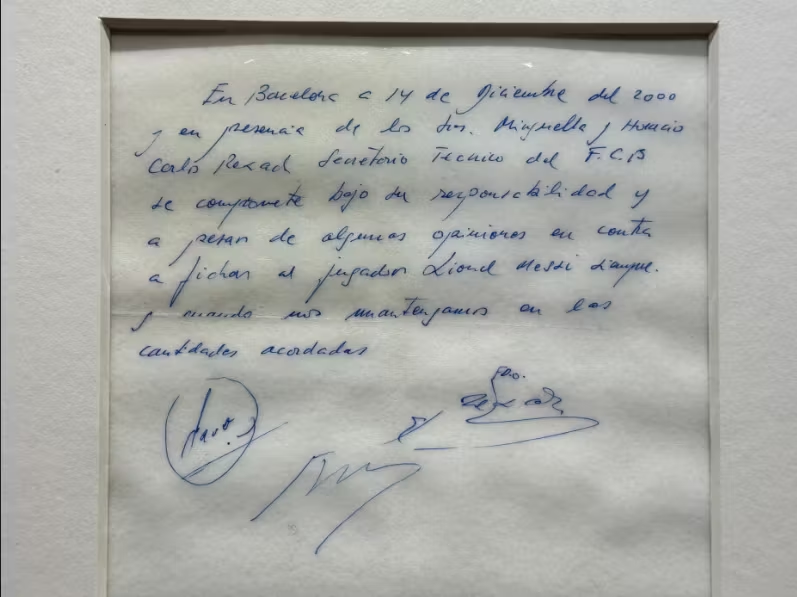
But every time someone looks at it, they will also be looking at a father who did not give up.