
Incest continues to be one of society’s greatest taboos, but there is a lesser-known fact: the laws governing it differ radically from one country to another.
In countries such as France, Spain, Portugal, Belgium, the Netherlands, Argentina, Brazil, Japan, South Korea, and Russia, certain consensual sexual relationships between adult family members are not classified as a specific criminal offense in and of themselves. That does not mean these countries “approve of” incest or necessarily allow marriage between close relatives: these are different legal issues.
Spain is a good example. Consensual incestuous relationships between adults do not specifically constitute the crime of incest, although there are restrictions on marrying certain relatives.
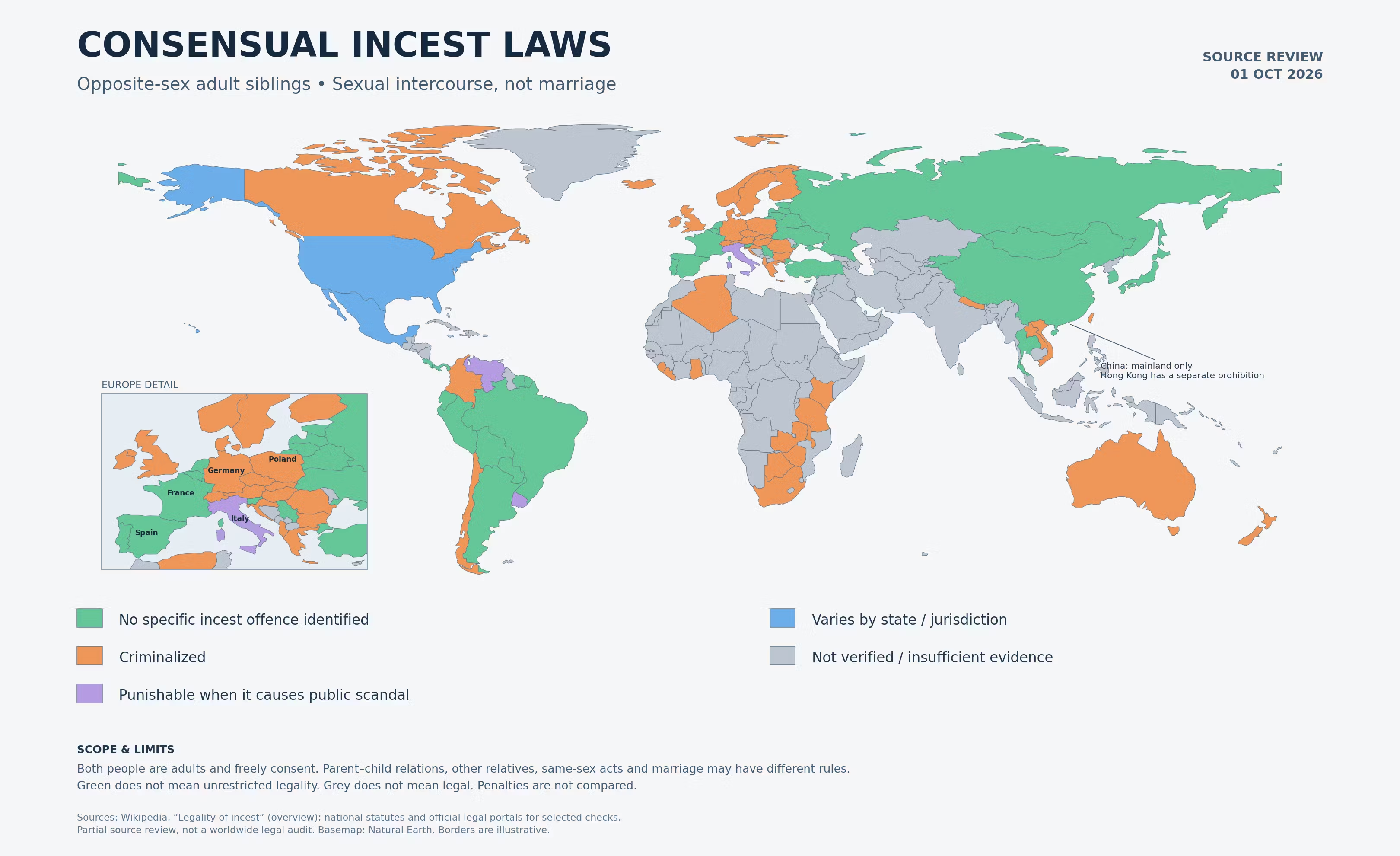
In other places, exactly the opposite is true.
Germany imposes penalties of up to three years in prison or a fine for certain relationships between biological ascendants and descendants, and also criminalizes sexual relationships between biological siblings.
In England and Wales, the law even explicitly addresses consensual sexual relationships between adult family members. The law covers relationships such as those between parents, children, grandparents, grandchildren, and siblings, as well as other family relationships specified by law.
And there is another fundamental distinction: the fact that consensual incest between adults is not a crime does not eliminate laws against sexual abuse. When minors are involved, consent is lacking, coercion occurs, or certain relationships of authority are present, other offenses and legal protections come into play.
That is why a world map can be misleading if it simply divides countries into “legal” and “illegal”.
The same conduct between adults may not constitute a specific crime in one country, yet be expressly punishable by imprisonment just across a border.