
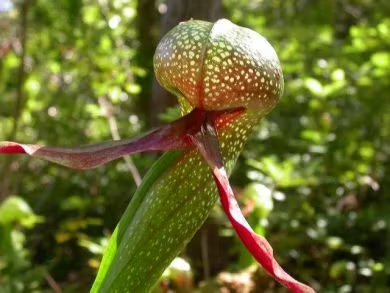
It captures only 2% of the insects that visit it. It feeds the other 98% with nectar, lets them go, and waits for them to return. That is how Darlingtonia californica works, a carnivorous plant that grows in California wetlands and that a new study published in the journal Ecology has just crowned the smartest predator on the planet.
Professor David Armitage, the botanist who led the research, found that the plant does not hunt at random: it regulates the cellular pressure of its leaves to decide, selectively, whom to trap. It does not destroy its prey — it cultivates it. It is, in essence, the only known species that practices something like livestock farming to ensure a continuous supply of nutrients. Scientists describe the strategy as mutualism: the insects benefit from the nectar and the plant secures food in the long term. 🌿
It has no brain, no nervous system, no muscles. And even so, it developed a survival logic that no lion or orca has matched. The finding forces us to rethink what exactly the word “intelligence” means.