
Brian and Kristen Wood decided to do something that not many families are willing to take on: adopt a child with a disability.
But they did not adopt just one, but three. Each one came from a different part of the world: the United States, Bulgaria, and China.
Each one came from a different place: the United States, Bulgaria, and China. And it was not because they could not have children. The couple from Virginia, United States, already had three biological children when they decided there was still room for someone else in their family.
It all began in 2016, when they met a family at their church that had adopted children with disabilities through Reece’s Rainbow, an organization that helps find families for children with Down syndrome and other special needs.
Until then, Brian and Kristen had thought about adopting a child with a condition that could be treated or medically corrected, such as a cleft lip or palate. But getting to know that family up close changed the way they thought.
That was how they learned about Katie, a Chinese girl with Down syndrome, and began the process of making her their daughter.
By March 2020, everything was ready. They were just two days away from traveling to China to bring her home when the COVID-19 pandemic closed the borders and brought the process to a standstill.
Katie had to remain in China, and no one knew how long the wait would last.
The months began turning into years, and while they continued waiting for her, life brought two other girls into their path. Brian and Kristen began a second international adoption process with Viktoria, a Bulgarian girl with cerebral palsy, and later agreed to become temporary caregivers for Makenna, an American girl with a chromosomal disorder and significant special needs.

Suddenly, the couple, who already had three biological children, found themselves involved in the lives of three other girls with disabilities.
The family grew little by little, and everyone had to adapt. Their older children also began participating in the new family dynamic, accompanying and helping care for their new sisters.
But the uncertainty surrounding Katie continued.


They spent nearly three years waiting to be able to bring her home. For a while, they received photographs, videos, and news from China, until the updates stopped coming. The uncertainty became so overwhelming that Kristen remembers wondering:
“Is she even alive? Can we get proof that she is alive?”
Finally, after three years of waiting, they were able to complete the process, and Katie came home. The three paths they had begun in completely different ways ended up converging, and Brian and Kristen went from having three children to becoming a family of six.
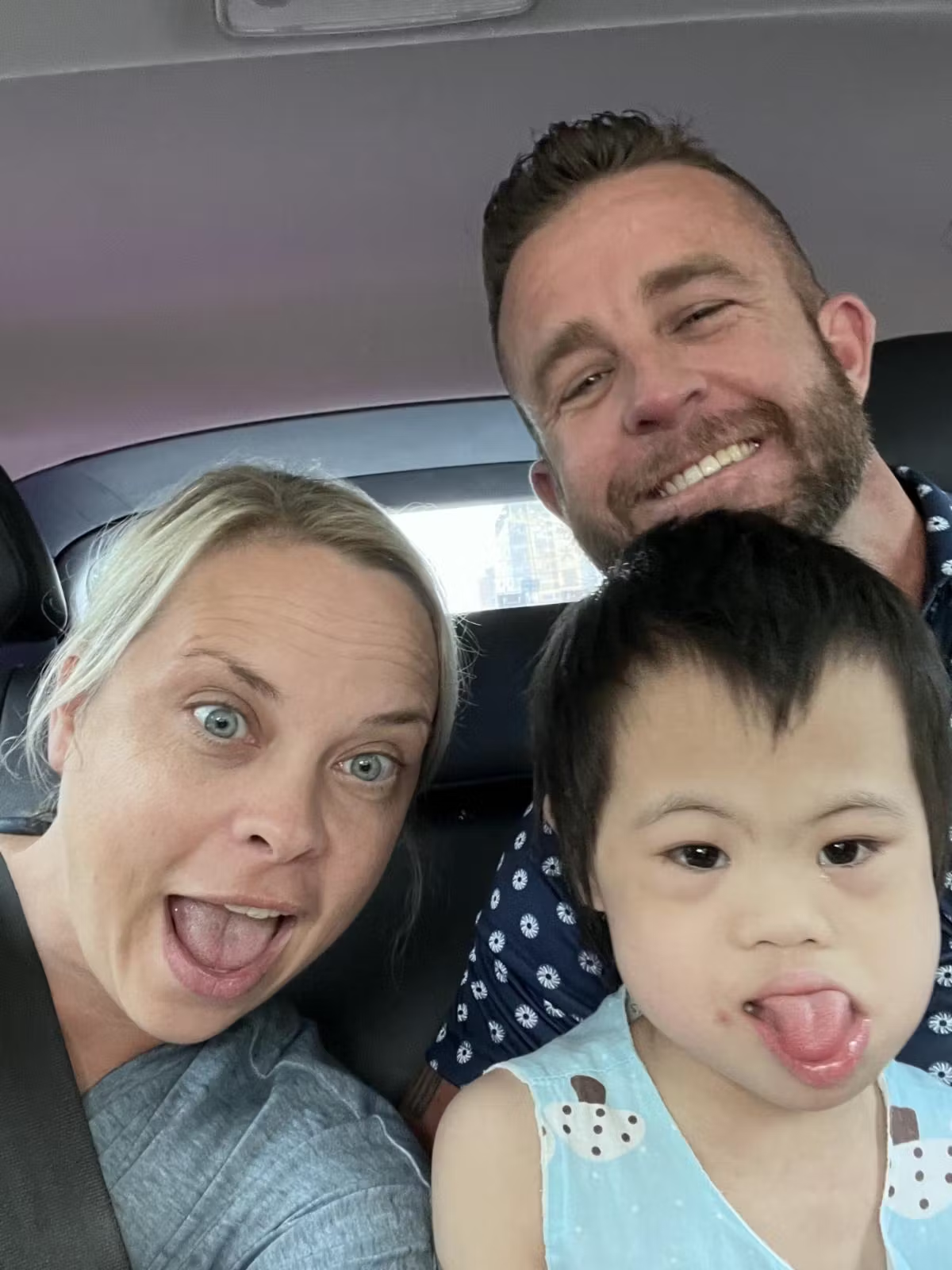
Since then, the girls have made significant developmental progress, and the family shares part of their life to show what the process has been like. But Kristen does not intend to portray adoption as a perfect fairy tale.
Especially with Katie. Kristen has admitted that the adjustment was more difficult than they had imagined. The girl came home older than she had been when they began the process and carrying a great deal of accumulated trauma. Kristen has spoken openly about the need to accept that some wounds do not simply disappear when someone arrives in a loving home.
Because, as she herself acknowledges, love alone cannot erase trauma.
And that may be what makes the Woods’ story different. It is not simply about opening their home’s doors to three girls with disabilities, but about deciding to keep moving forward even when building that family turned out to be far more complicated than they had imagined.