
Grace appears to be a healthy girl, but once a month, she suffers such severe pain that she is incapacitated. Her only option is to go to the hospital, and often the pain is so intense that her parents carry her to the car because she cannot walk.
She is 14 years old and lives in Yorkshire, England. She started menstruating at 11, and by 13, the pain had become unbearable: she describes it as hot barbed wire wrapped around her abdomen, as if her organs were being torn apart from the inside.
“I felt like they saw me as a girl who didn’t want to go to school and was exaggerating”, Grace said.
Doctors suggested irritable bowel syndrome, a cyst, anxiety, or simply a bad period. But Grace knew there was something more, and despite her young age, she decided to listen to her body.

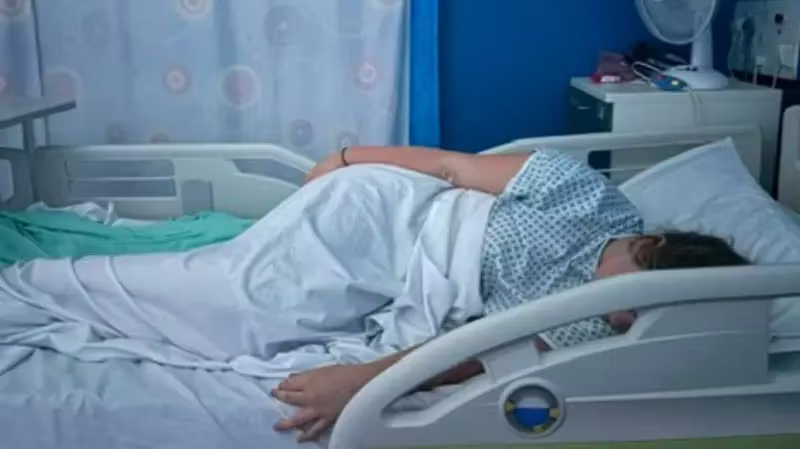
For a while, she felt that no one fully believed her, but suddenly the deterioration caused by the pain became undeniable. Grace was bedridden, and when the painkillers she had at home were no longer enough, she had to go to the emergency room, where she was given morphine to control the pain.
But what was wrong with her, then?
There was a pattern to all of this: Grace ended up in the hospital every time she had her period, and her symptoms matched those of endometriosis, a disease in which tissue similar to the lining of the uterus grows outside the organ and can cause debilitating symptoms, such as severe pelvic pain, heavy periods, and fatigue. It also causes lesions and scarring in the internal organs.
But the doctors kept telling her that she was too young to have it.
However, Grace was not too young. Pediatric gynecologist Gail Busby explained that she treats cases of endometriosis even in girls younger than Grace and that, although painful periods can be common during adolescence, being incapacitated by them should not be considered normal.
In Grace’s case, neither her general practitioner nor the first private specialist she saw managed to diagnose her. Only when her family insisted on seeking a second opinion did Grace finally receive the answer she had been looking for so long: she did have endometriosis, a chronic disease that affects approximately 10 % of women of reproductive age and can take years to diagnose.
Today, during her most severe episodes, Grace still has to go to the hospital, where she regularly receives morphine to control the pain. It is a situation that is beginning to worry her.
“It’s frightening, because I don’t want to have to depend on it for the rest of my life”, she confessed.
She recently underwent surgery to remove lesions caused by endometriosis, but the disease has no cure and she may need another operation. She was also warned that the damage to her reproductive organs could affect her fertility and that she might not be able to have children after the age of 30.
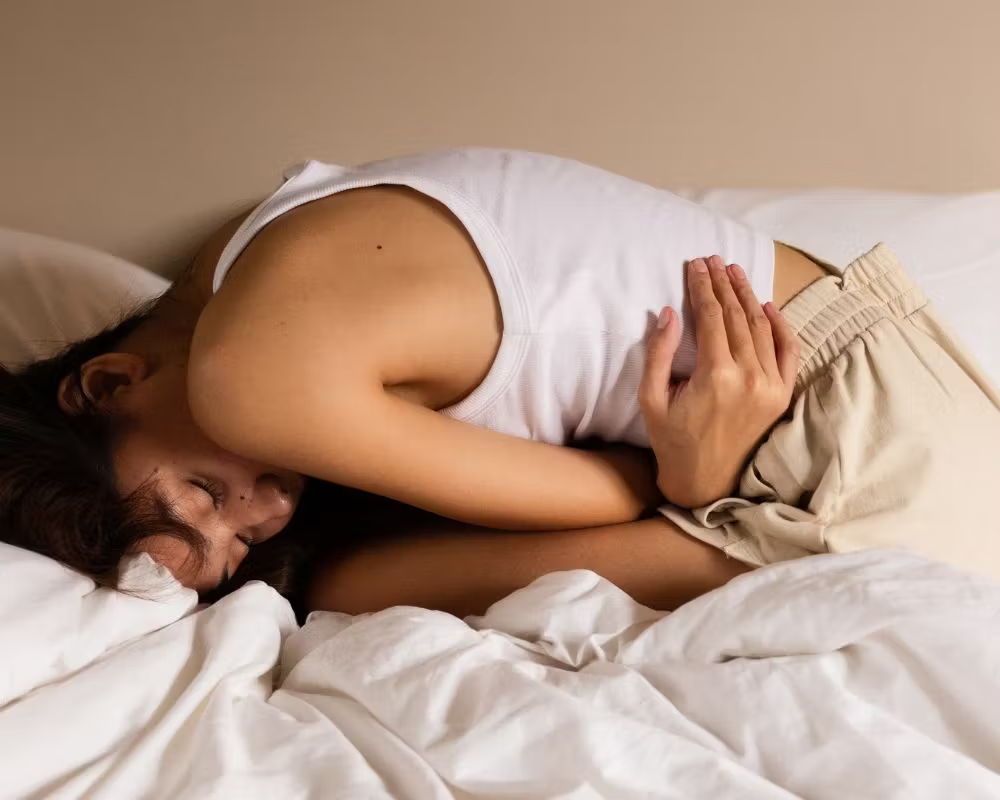
Grace decided to tell her story so that other teenagers can learn to recognize when something is wrong and do not have to struggle so much to get someone to listen to them. She is not asking for pity. She wants the next girl who feels that same pain to know that she is not exaggerating.
“I felt like I was going crazy. Like it was all in my head”, she said. “You know your body better than anyone, and your pain is real”