
Although they may look identical at first glance, the brains of people with and without psychopathic traits differ in how they function. This has been demonstrated by various scientific studies using scans that make it possible to observe brain activity and connections between specific regions.
One of the main differences studied is found in the prefrontal cortex, a region behind the forehead that plays a role in regulating emotions, controlling impulses, and making decisions. Changes have also been identified in the amygdala, a key brain structure for processing emotions such as fear and for making decisions.
One of the most surprising examples of this research occurred in 2005, when James Fallon, a neuroscientist at the University of California, Irvine, was examining brain scans as part of his research into violent behavior.
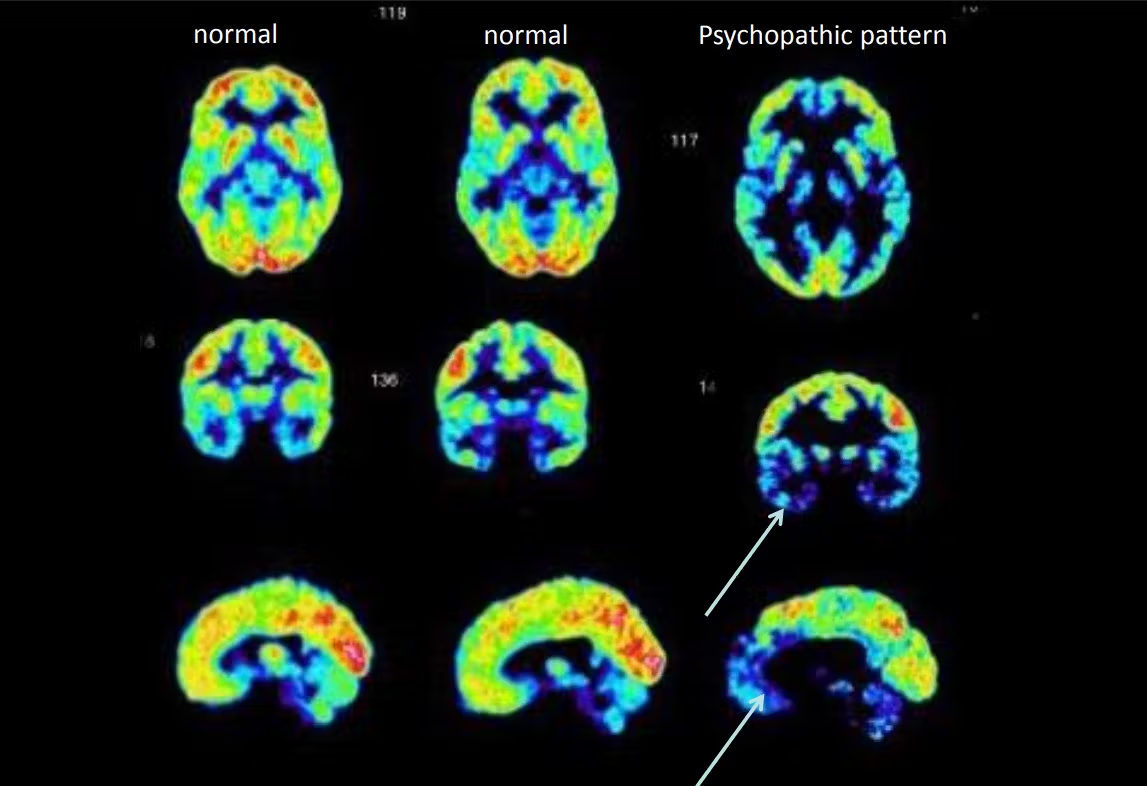
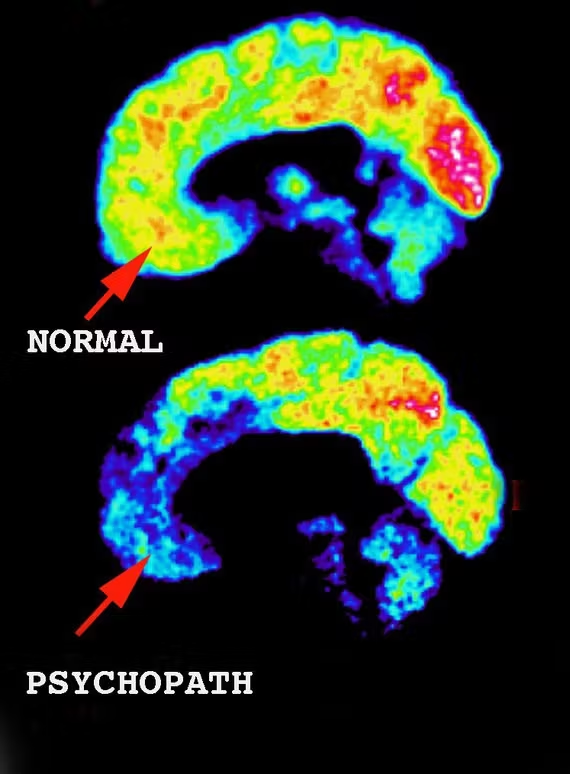
As he reviewed the images, he found a brain that showed notably reduced activity in certain frontal regions, especially in areas related to emotional regulation and impulse control.
What Fallon did not expect was to discover that the brain was his own.
The researcher had included images of his own family in a study and, while reviewing the results without knowing the participants’ identities, recognized a brain pattern he associated with psychopathy. When he checked whose scan it was, he discovered that he was looking at his own brain.
The surprise was even greater when he compared it with images of his wife and children, which showed different activity patterns.
However, there was an important contradiction: Fallon was not a murderer and had not developed a history of criminal violence.
The neuroscientist himself attributed some of this difference to his upbringing. He explained that he had grown up in an affectionate and stable family environment, which he considered essential to understanding why his behavior had differed from that of some of the individuals whose brains he had studied.
His story raises a question scientists have been trying to answer for decades: How much does biology influence our personality, and how much depends on the environment in which we grow up?