
Turtle doves are synonymous with romance; it is no coincidence that couples in love are known as “lovebirds”. However, behind their reputation for forming close, monogamous, passionate pairs, science has discovered that even these relationships can end in “divorce”.
A team led by Yiqing Chen and Yang Liu, from Sun Yat-sen University, analyzed data on turtle doves and 185 other species of monogamous birds and discovered that many pairs broke up from one year to the next.
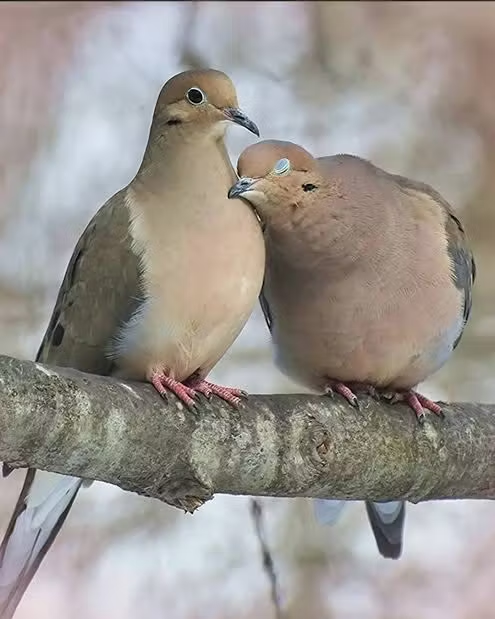
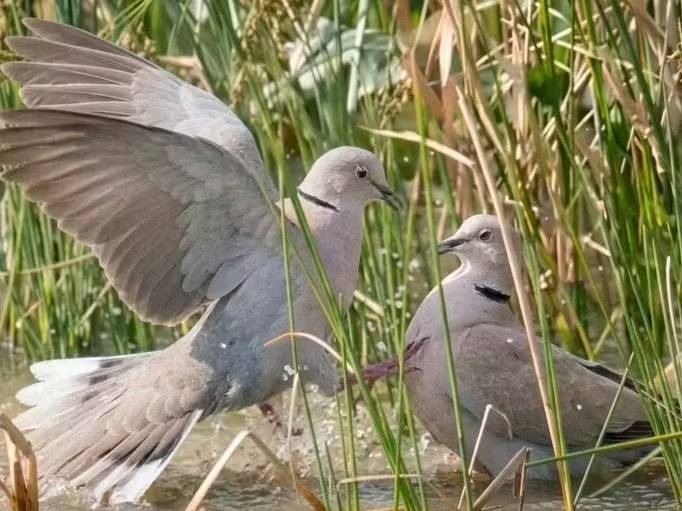
And although one might think that the death of a mate is the main reason these birds pair up again, the study found a much more unusual association.
One of the main reasons was male promiscuity, associated with higher separation rates. Birds that undertake longer migrations also showed higher rates of “divorce”.
In other words, beneath the appearance of a stable relationship, there is also room for jealousy, infidelity, and a good dose of passive-aggressiveness. In the world of turtle doves, some relationship problems are literally resolved with pecks. And, honestly, it does not seem all that different from some human relationships.
But we could say that turtle doves are also toxic and perhaps somewhat possessive. Once a pair is already established, males are especially aggressive toward other females that are not their mate. In many cases, they chase and reject them while reserving behaviors such as preening and nest-building for their partner.
From now on, anyone who uses the expression “they are two lovebirds” will have to be aware that they may be describing a toxic relationship of mutual dependence.