
Neurologist John Lorber discovered in 1980 that a mathematics student at the University of Sheffield, who sought help for migraines, had almost no brain due to severe hydrocephalus. 🤯
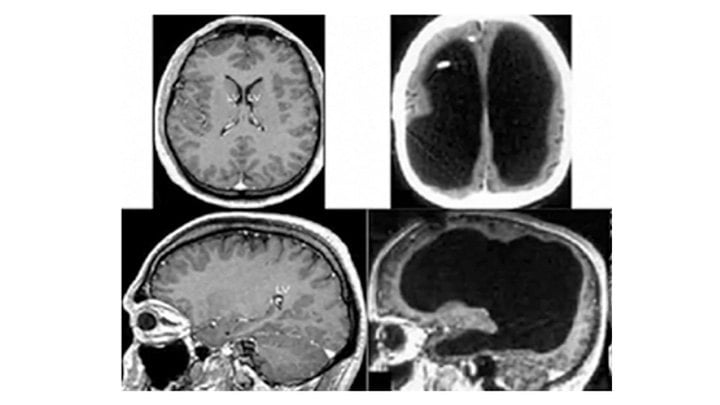
Scans revealed that his skull was filled with cerebrospinal fluid, with only about 50 to 150 grams of brain tissue instead of the usual 1.5 kg.
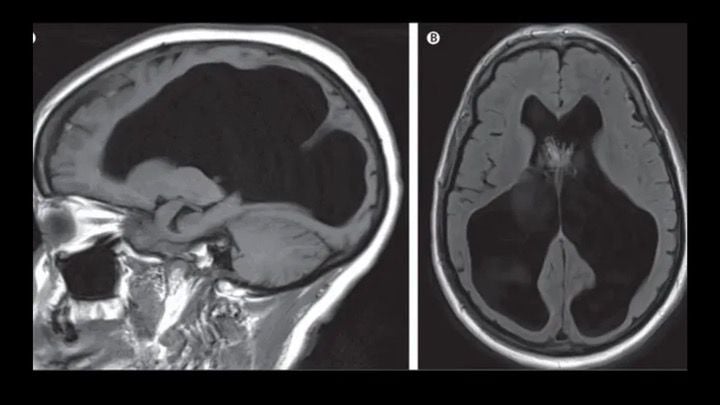
Remarkably, despite having just a thin layer of brain cells, the young man was fully functional, had a normal social life, and an IQ of 126.

Following this case, Lorber studied around 600 similar patients and found that some individuals with less than 5% of typical brain volume still had above-average intelligence.

More recent theories suggest that in such cases, the brain tissue isn’t actually missing but extremely compressed within the available space. 🧠