
For most people, the idea of having dozens of holes in the skin from which living creatures emerge is the plot of a horror movie; however, in the depths of the tropical rainforests of South America, this is simply just another Tuesday for the Surinam toad (Pipa pipa).
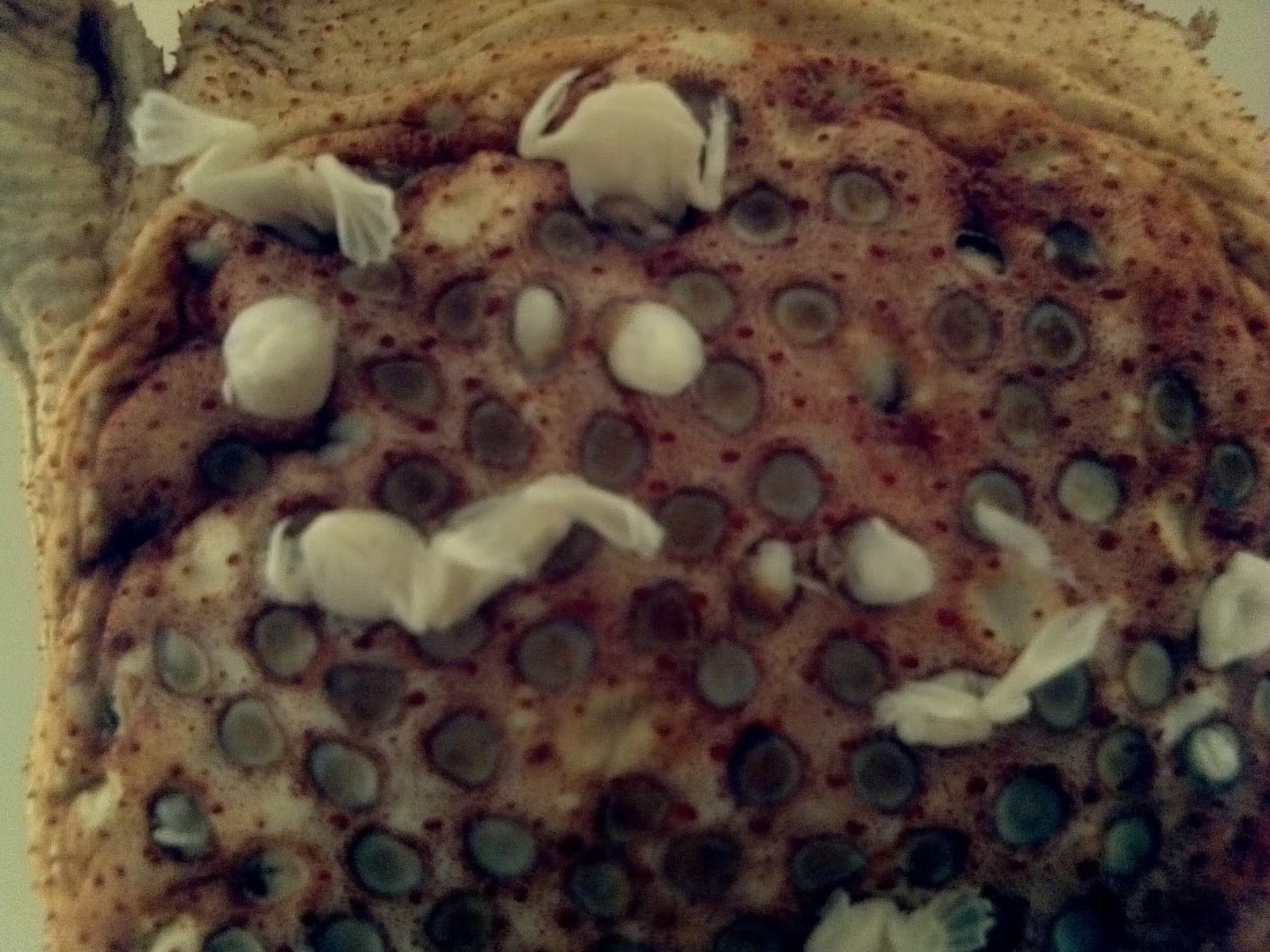
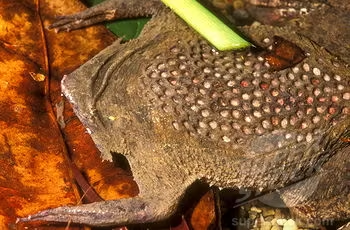
Unlike other toads that lay their eggs in the water and leave, the Surinam toad carries motherhood on its back.
During mating, the male places the fertilized eggs on the female’s back. This is where the magic begins: the skin on the mother’s back starts to swell and grows around the eggs, trapping them in a kind of cells or pockets of floating skin.
Over the next four months, the eggs do not turn into ordinary tadpoles. They develop fully as tiny toads within their mother’s own skin.
When the time for birth arrives, one by one, the little toads begin to move under the skin and push until they break through the surface, shooting out of the holes directly into the water.
The image of perforated skin moving and expelling animals is what immediately triggers trypophobia in human beings.