
An ophthalmologist examines the inside of an eye and finds something that looks like it came from a miniature snowstorm: dozens of whitish particles suspended, moving every time the eye turns.
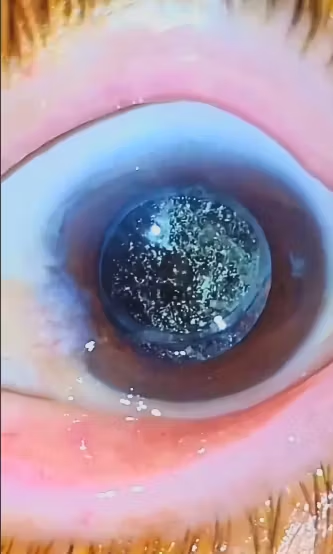
The diagnosis has a proper name, asteroid hyalosis, and it occurs inside the vitreous humor, that gelatinous substance that fills the inside of the eye and gives it shape. They are deposits of calcium and fat that, over the years, accumulate and remain floating like small stars suspended in gel. It sounds unsettling, and visually it is, but most people who have it do not even know it.
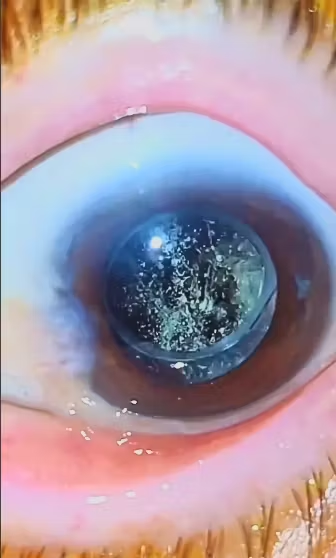
The most curious thing is that, despite how striking it is to see those particles during an eye exam, they almost never affect vision in any significant way. The eye learns to live with them, and life goes on as if nothing were floating around in there.