
It’s motionless. It’s not breathing. By all logic, it’s dead. And even so, the moment you bring your hand close, its jaws snap shut with enough force to crush your fingers.
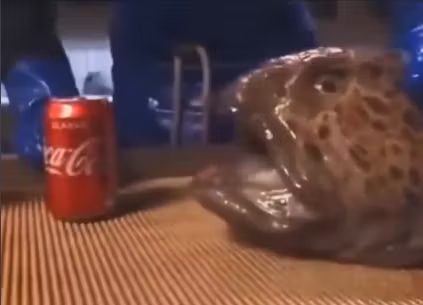
The wolffish is a cold-water species with jaws designed to crack shells and snails. What makes it so dangerous even out of the water is a mechanism it shares with many vertebrate animals: the nervous system does not shut down all at once. For a while after death, the muscles continue responding to external stimuli through involuntary reflexes. Touching the jaw of a freshly caught wolffish—or even one that has been dead for minutes—can trigger that reflex in a fraction of a second. Dozens of professional fishermen have learned this the hard way: with amputated fingers or severely injured hands.
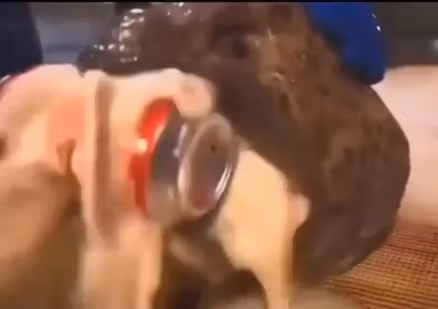
The most common mistake is assuming that an animal that is no longer moving no longer poses any risk. Experienced fishermen never handle these species with bare hands; they use pliers, hooks, or reinforced gloves because they know that a single reflex bite can change their life forever. The calm of a dead wolffish is not a sign that it is harmless: it is, exactly, the trap.