
Walter Jr. wasn’t created to add to the problems in Walter White’s family; he was born from the memory of a friend.
At New York University, director and screenwriter Vince Gilligan met Takehiko Kitazawa, a young man with advanced cerebral palsy who used crutches and leg braces to walk. Gilligan described him as a brave, endearing person who could quickly become everyone’s friend.
“He was the best guy. We all loved him”.
Takehiko died a few years after graduating from college, but Gilligan continued to think about him, his family, and all the difficulties they had faced together.
When he began building the family for Breaking Bad years later, he decided to turn that memory into a character. Walter White’s son would have cerebral palsy, but he wouldn’t be portrayed as a victim or as a constant lesson in overcoming adversity. He would simply be an ordinary teenager: he’d crack jokes, argue with his parents, try to buy beer, and have contradictions and a desire for independence.
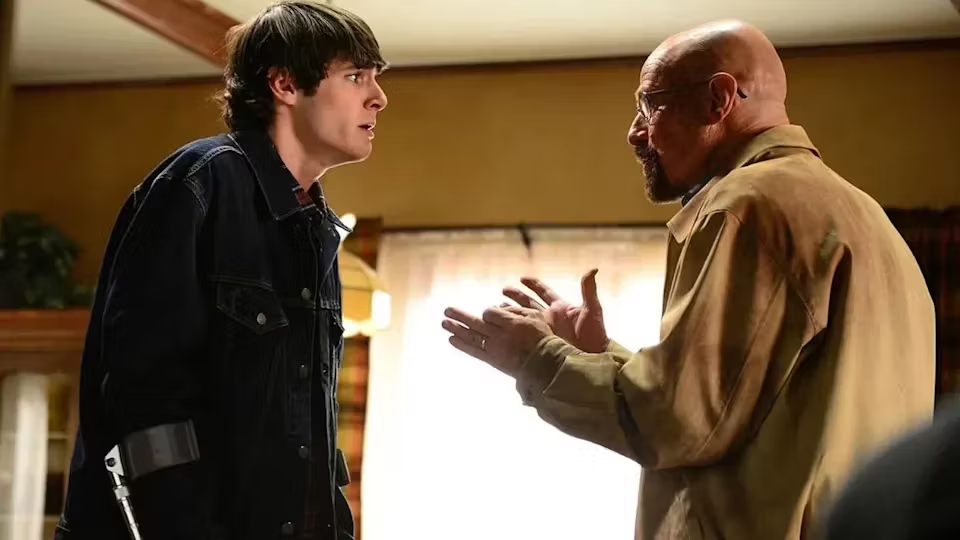
Gilligan himself explained that, within the White family, no one needed to introduce him as “our son with cerebral palsy”, just as no one would say “our son who hates beets” or “our dark-haired son”. They were all real characteristics, but none of them completely defined who he was.
And he had one fundamental casting requirement: whoever played him had to actually have cerebral palsy.
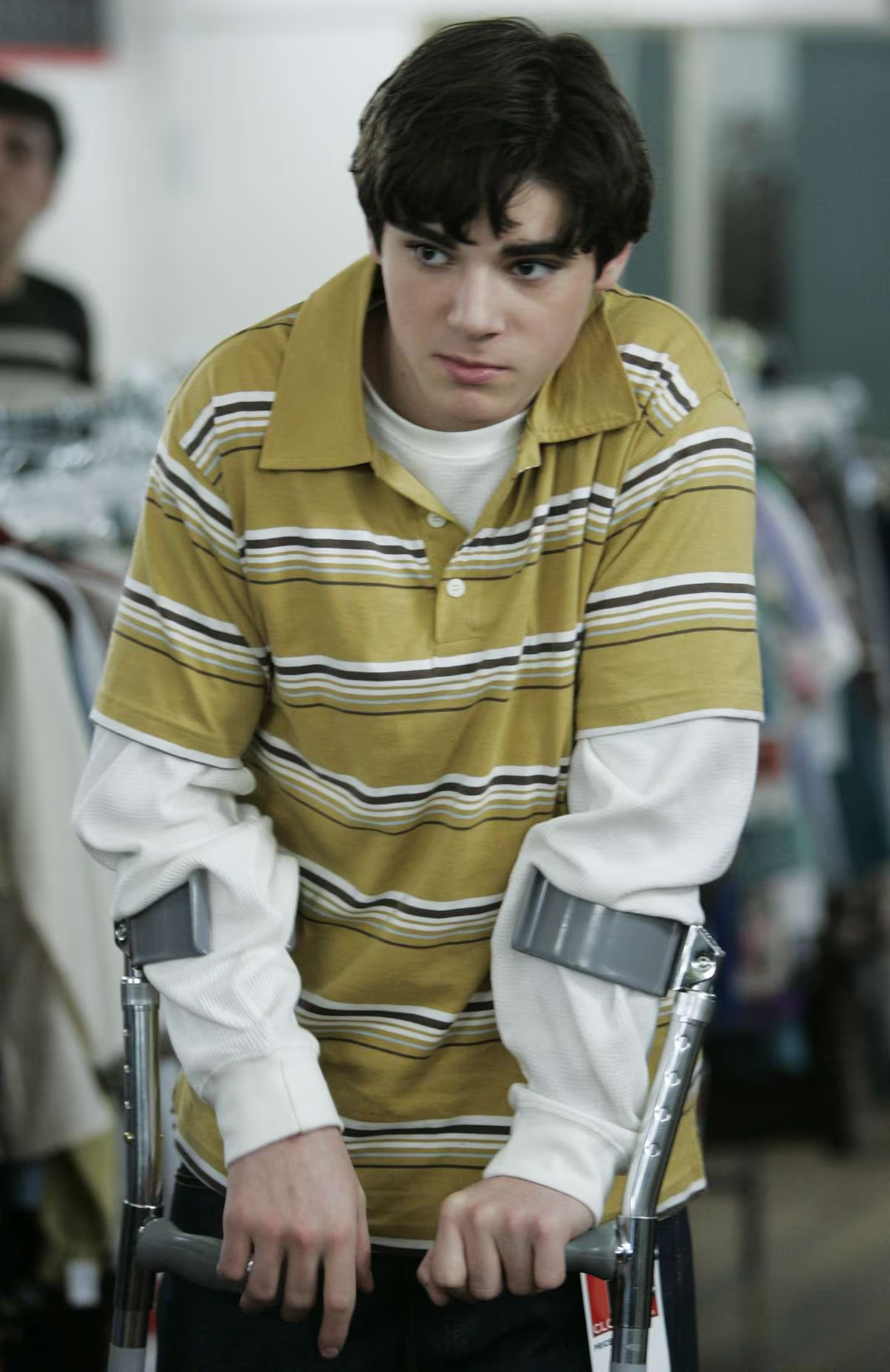
Then RJ Mitte came along. He was born in Jackson, Mississippi, in 1992. A lack of oxygen during delivery caused brain damage, and he was diagnosed with cerebral palsy at the age of three. During his childhood, he wore leg braces and spent years in physical, occupational, and speech therapy.
RJ didn’t know any other life. As a child, he even thought all kids went to therapy like he did. It wasn’t until he started school that he realized his classmates saw him as different. He couldn’t play football because of his coordination problems, and he was teased for the way he moved and spoke.
His arrival in Hollywood happened almost by accident. An agent discovered his younger sister at a Texas amusement park, and the family traveled to Los Angeles. RJ was offered work there too, and he started out as an extra to help support his family. His first job was during the first season of Hannah Montana.
Soon afterward, he auditioned for Breaking Bad.
The team was looking for a teenager with more advanced cerebral palsy. In fact, RJ came close to being rejected because he had spent years learning to walk without crutches and speak more clearly. The very rehabilitation that had given him independence seemed to make him “not disabled enough” for Hollywood.
But he kept coming back. He auditioned five times: four in Los Angeles and one final time in New Mexico. And so the role of Walter Jr. went to that 14-year-old teenager who was just starting his career.
The character began as a teenager who idolized his father. Walter Jr. saw him as a sick teacher willing to fight for his family, never imagining that Heisenberg was hiding behind that image.
Over five seasons, that admiration gradually crumbled. When he finally learned the truth, Walter Jr. stepped between his parents, protected Skyler, and called the police. Then he rejected Walter’s money and refused to let him justify his crimes in the name of family.
For RJ, the moment when Walter Jr. defended his mother was the most important one for his character. Walter Jr. had gone from being a son who looked up to his father to one of the few people capable of standing up to him.
Mitte appeared in 56 episodes of Breaking Bad and grew up in front of the cameras from his teens into his twenties. Bryan Cranston recalled that he arrived for the pilot as an inexperienced young man, but the entire cast watched him gradually become “a great actor”.
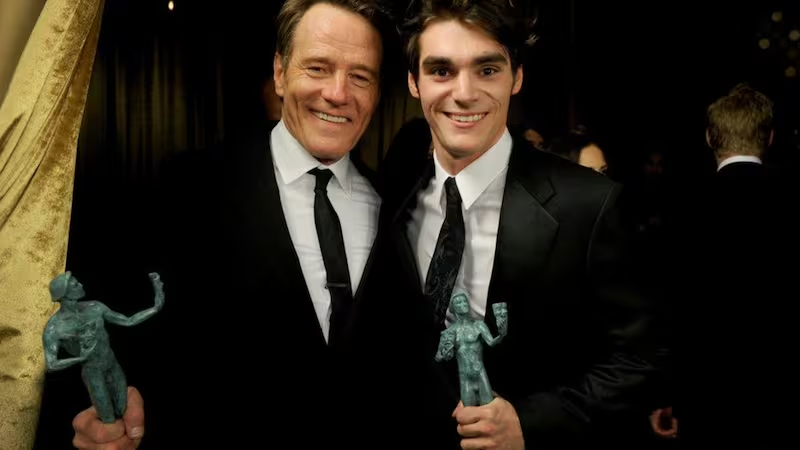
In 2008, when the series was just getting started, RJ already understood that the role meant something bigger than his own career:
“I hope people with disabilities can see that they can do whatever they want and achieve whatever they set out to do”.
After Breaking Bad, he continued acting and turned his recognition into a platform to advocate for other performers with disabilities. He wasn’t just asking for characters written around a medical condition: he demanded that they be able to audition for any role and be considered actors first, rather than diagnoses.
RJ Mitte died on October 12, 2026, at the age of 34. Bryan Cranston said goodbye to him by remembering the teenager he had met on set, and ended his message with the words only a man who had played his father for five seasons could say to him:
“I’ll miss you, son”.
Bryan Cranston
Walter Jr. was born from the memory of Takehiko, a young man Vince Gilligan didn’t want to forget. Later, RJ gave him his face, his voice, and a part of his own story. One inspired the character; the other made it possible for millions of people with disabilities to see themselves on screen without being reduced to their disability.
Mitte is gone now. So is Takehiko, but Walter Jr. is still there: arguing with his parents, defending his mother, and waiting for someone to finally serve him breakfast. A memory that will never fade.