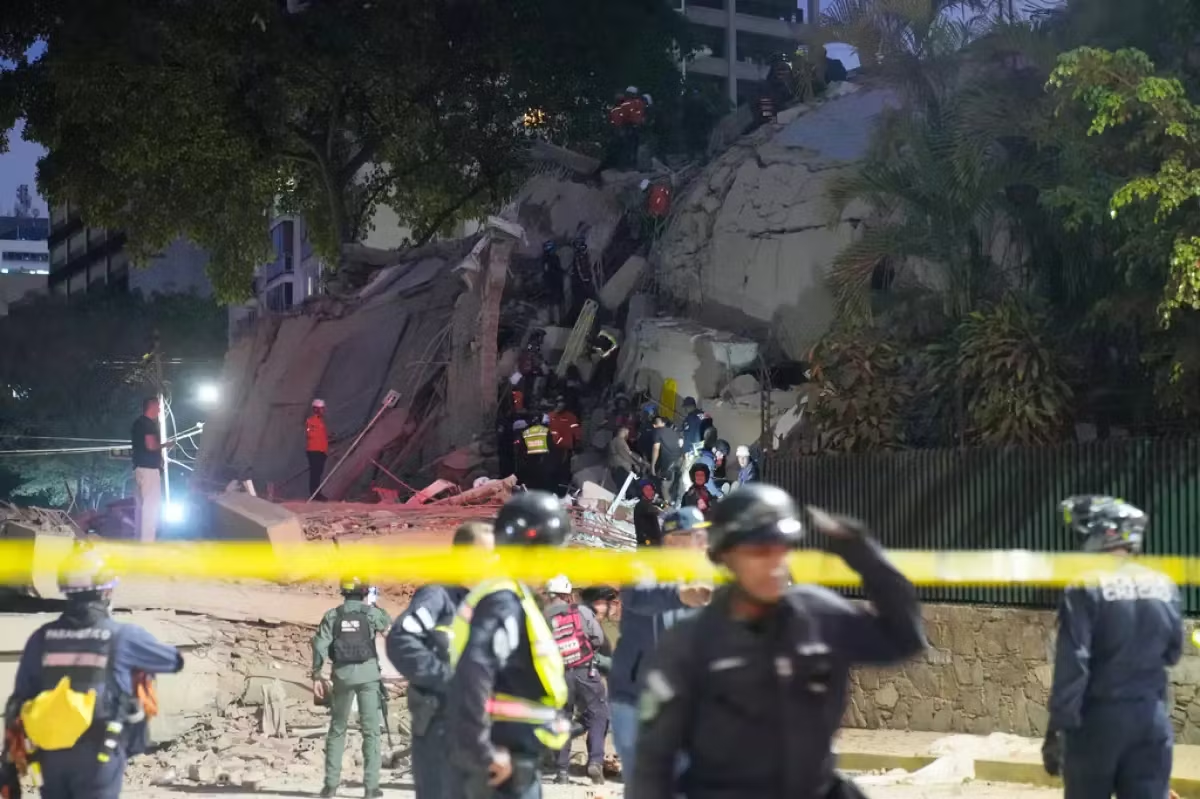
Venezuela, California, and Japan in less than eight hours. Four major earthquakes spread across three different countries and two different continents raised a question that spread through social media and scientific channels alike: is something unusual happening in the planet’s depths?
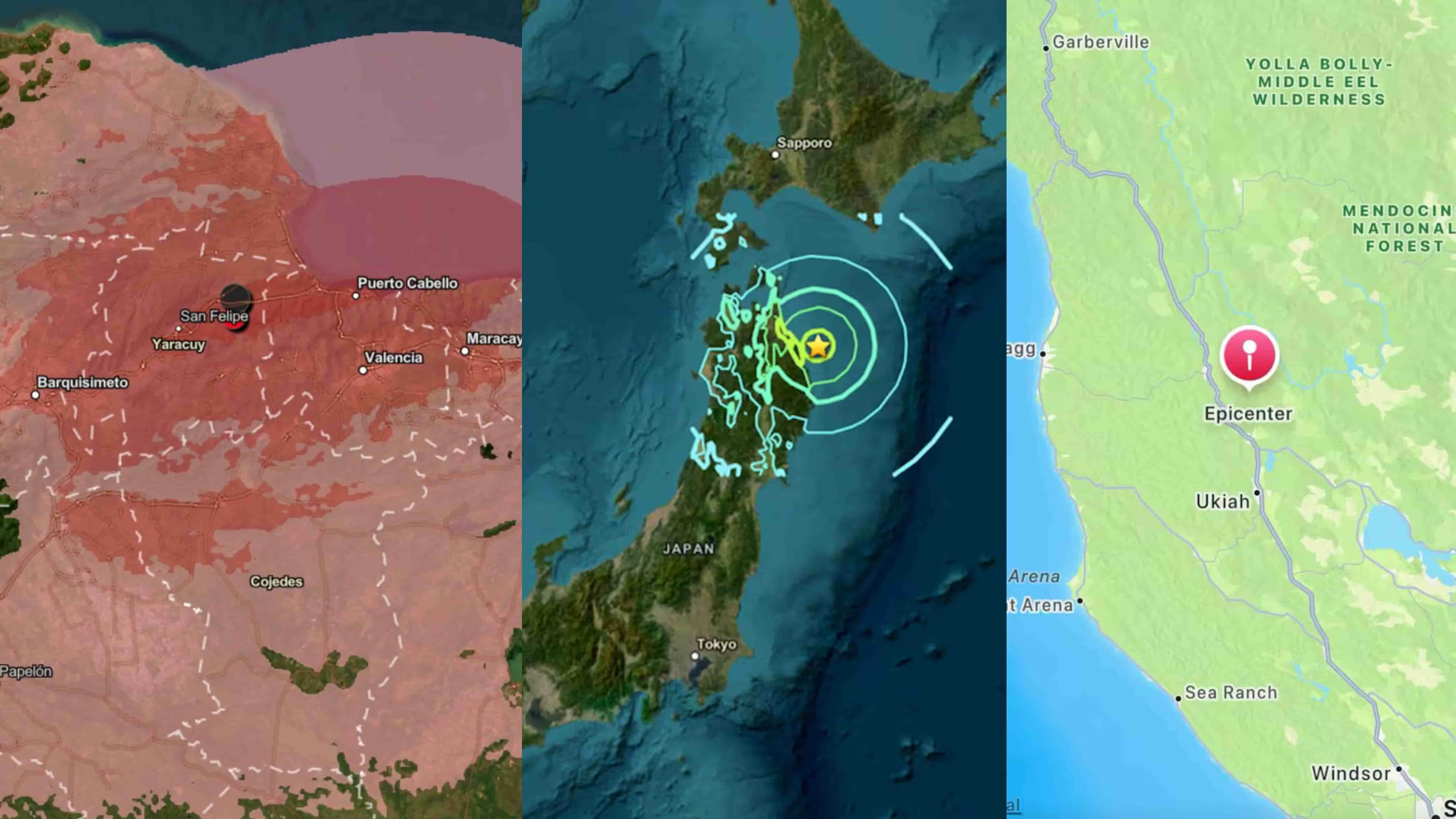
What was most extraordinary was not the number, but what happened in Venezuela: two earthquakes of magnitude 7,2 and 7,5 separated by just 39 seconds in the same fault zone. Seismologists call this a “seismic doublet”. A double rupture in contiguous segments of the same fault, where the first quake acts as a precursor and the second, more destructive one, represents the main rupture. It is a phenomenon previously recorded in New Zealand in 2016, Indonesia in 2012, and Japan in 2011, although rarely with such a short interval. As for the global coincidence, the USGS explains that the Earth records around 500.000 earthquakes a year, about 1.300 per day, and that a major earthquake cannot trigger another similar one on the other side of the planet: the waves that travel between continents alter the stress state of other faults so minimally that it is scientifically insignificant.
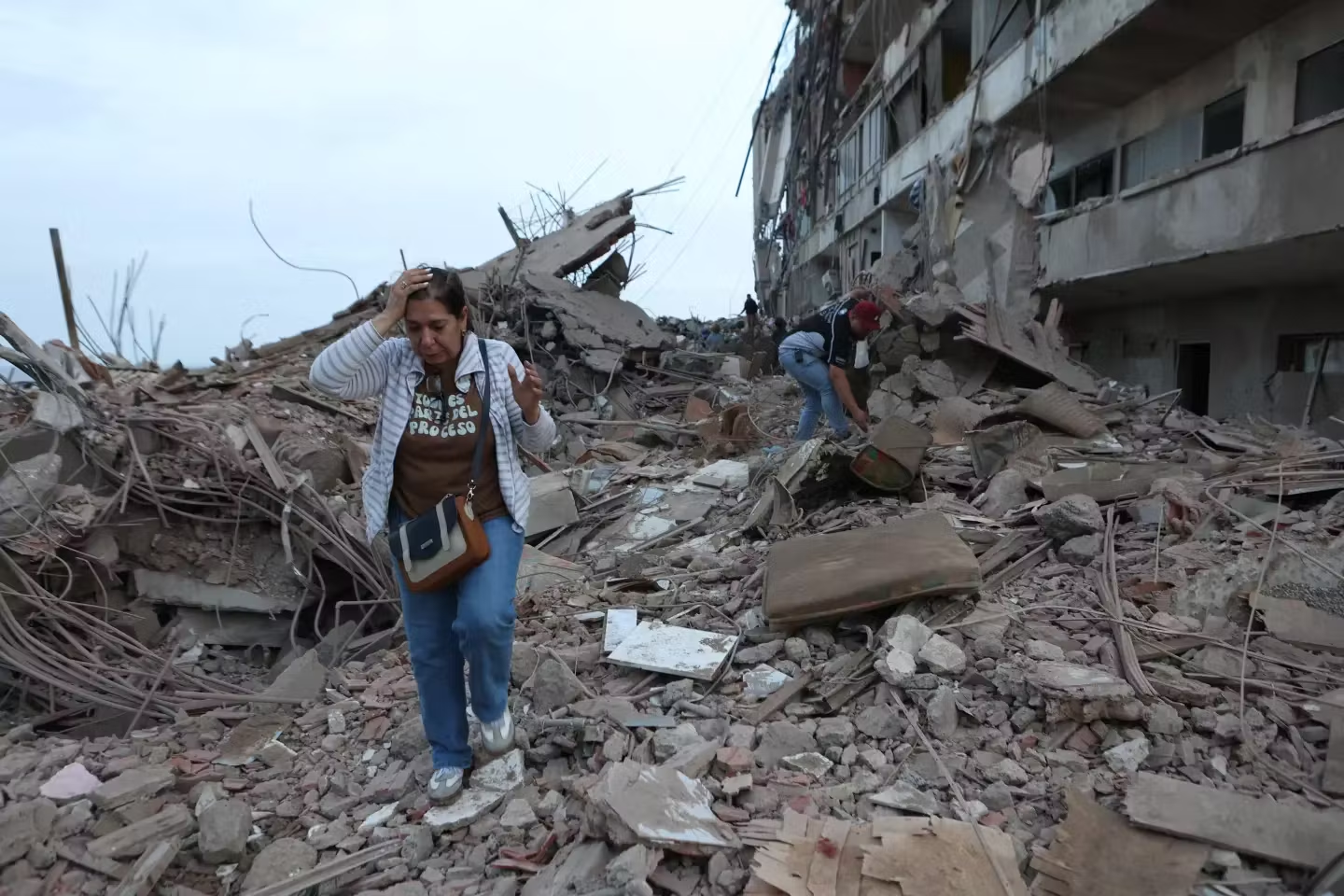
What seemed like a domino effect was, in reality, pure statistics.