
Ernesta Solar shared a video on her social media that turned the world upside down. On her TikTok account, under the name @iselljewelry2, the woman showed what happened to the glass of moon water she left with menstrual blood in it. After months of waiting, the glass showed a green, plant-like shape floating in the liquid.
Since then, other women have repeated the experiment successfully. They mix their blood with water they left out overnight under the light of the full moon and, after waiting a few weeks, post photos of what sprouts. Some claim the shapes change depending on the stage of their cycle.
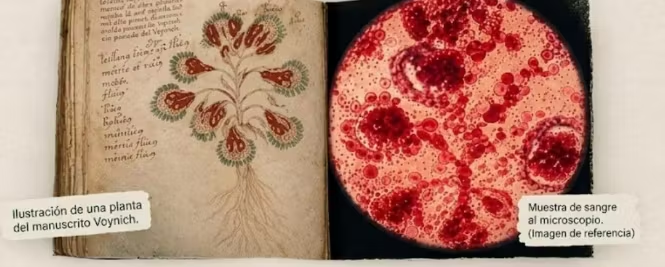
The mystery remains: blood contains nutrients that plants use, but there is no scientific evidence that it can make a plant grow, and what can be seen in those jars has not been identified.
But some compare it to the strange botanical illustrations in the Voynich manuscript, a medieval book kept at Yale University that has baffled historians and cryptographers for more than a century. The codex, whose parchment was dated to the early 15th century through radiocarbon testing, contains more than a hundred pages written in a system that no one has been able to decipher to this day.
Part of the mystery lies precisely in its illustrations. Dozens of pages show strange plants, roots, and flowers. So when images of the supposed “plants” that had emerged inside these glasses began circulating, some users saw an unsettling resemblance to those medieval illustrations. But there is no evidence that the manuscript mentions menstruation, “moon water”, or any similar method for growing plants.
And we also don’t know what is actually growing inside the influencers’ containers. There are no analyses identifying those green shapes as plants, nor any independent evidence to confirm that they appeared in the way the influencers claim. For now, the resemblance to the Voynich is just a curious visual comparison in a viral experiment that continues to raise more questions than answers.