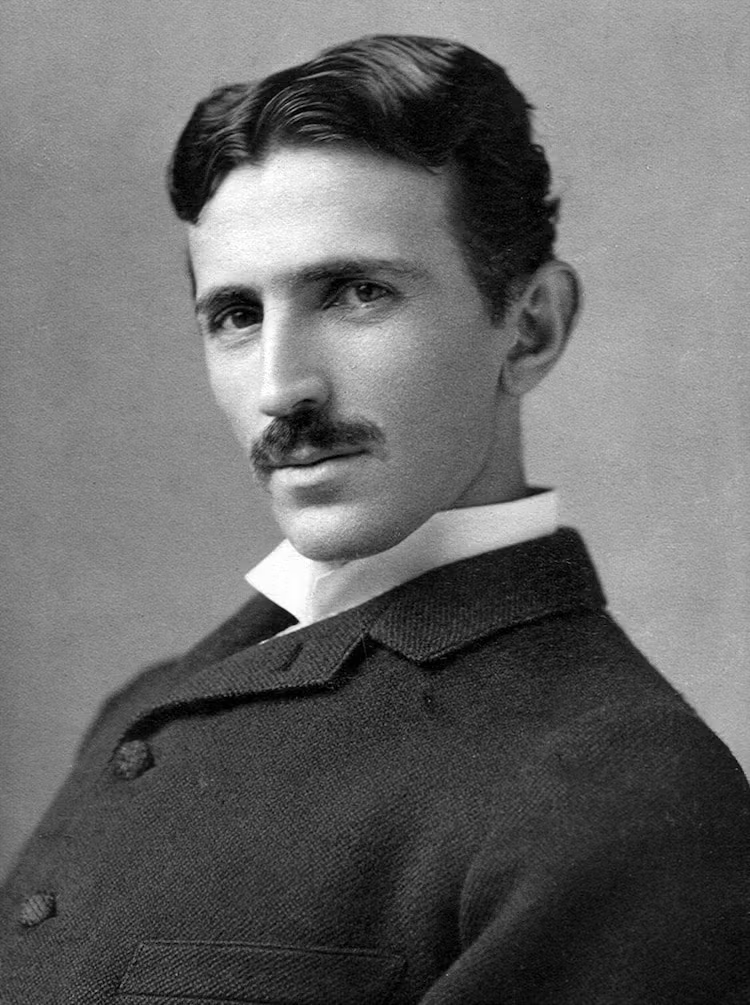
Tesla already suspected something before the rest of the world knew it.
From 1894, he experimented with vacuum tubes and radiation, a year before Wilhelm Röntgen officially announced the discovery of X-rays. When the news was confirmed in 1895, Tesla did not limit himself to admiring someone else’s discovery: he built his own vacuum tube, powered by his high-frequency coils, and decided to use himself as a test subject.
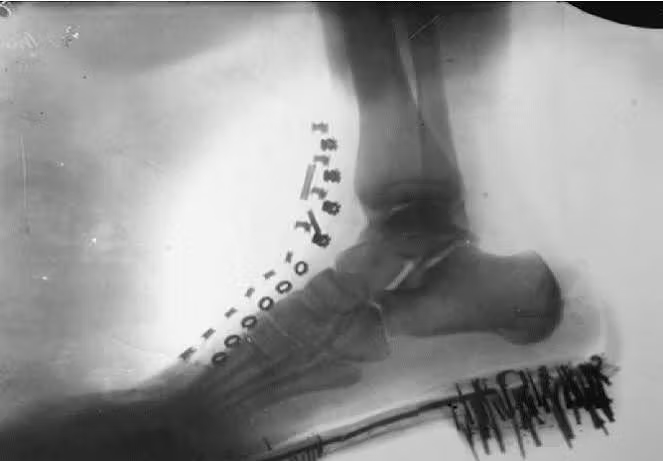
He stood about 8 feet from the apparatus and captured an image that is preserved today as a scientific relic: the bones of his foot, the eyelets of his shoelaces, and even the internal nails of the shoe, all visible in what he called a ‘shadowgraph.’ Röntgen himself came to recognize the sharpness of those plates. Almost 130 years later, that radiograph remains a direct window into the mind of a man who did not wait for science to arrive: he pursued it.