
“WHAT WILL BECOME OF HIM WHEN I DIE?”: A MOTHER’S TIRELESS STRUGGLE TO SECURE HER SON’S FUTURE
When Dolores Pujol received her son Marco’s diagnosis in the mid-1980s, her world came crashing down. In an era when the internet didn’t exist and the word “autism” was a taboo shrouded in ignorance, this young mother from Tucumán, Argentina, became her little boy’s protective shield. Marco has severe, nonverbal autism and requires constant care.
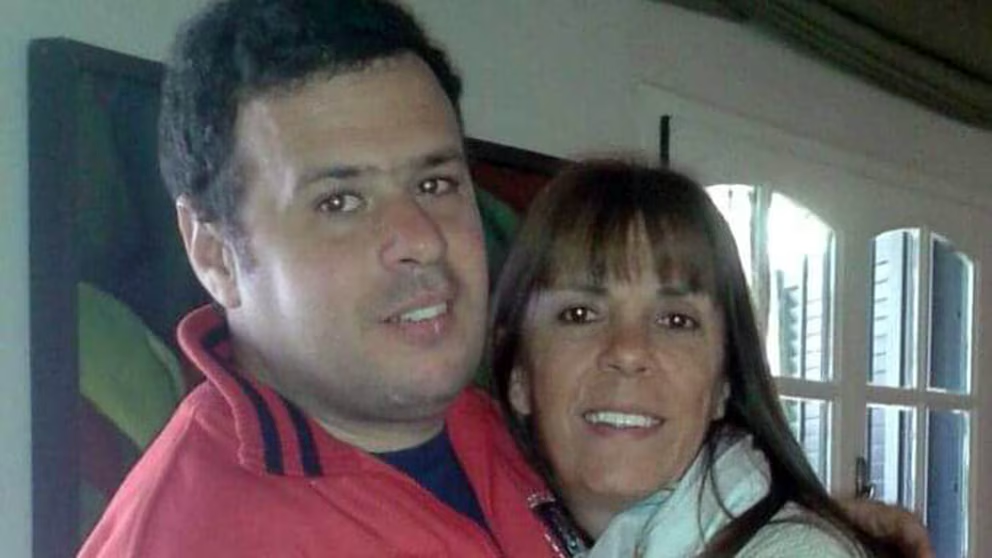
Dolores Pujol
Dolores devoted her entire life to Marco. She watched him grow up, learned to understand his silences, and protected him from a world that wasn’t ready for him. But as the years went by and she turned 64, a question began to weigh heavily on her mind at night: “What will become of him when I die? What will become of him when his father dies?”
Although she knew that Marco’s siblings would never abandon him, Dolores felt a deep anguish: “They’ll always protect and care for him, but they don’t have to take him in to live with them; everyone has their own life,” she said.
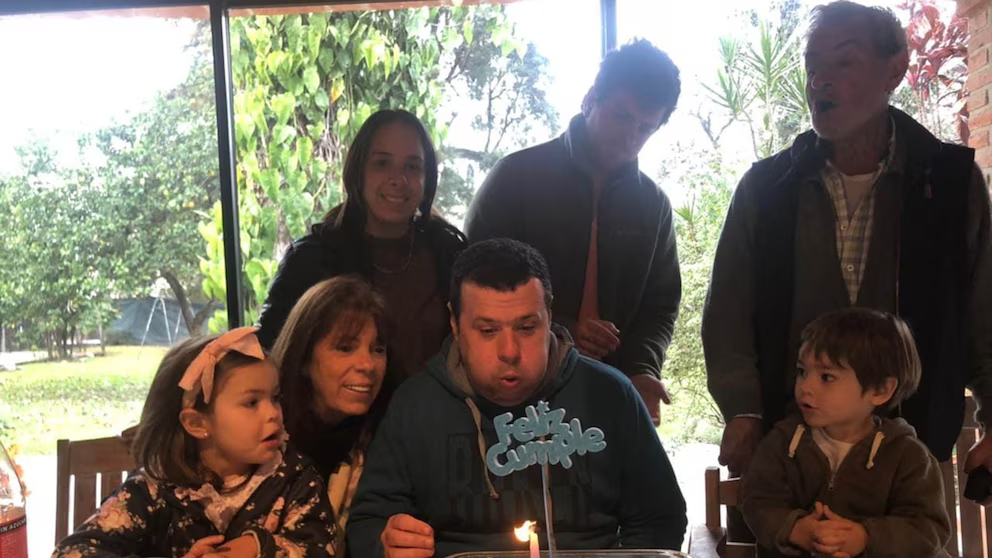
Dolores Pujol
This is the harsh reality of autism in adults, a stage that society barely discusses, mistakenly assuming that children with autism never grow up.
Far from giving in to her anguish, Dolores channeled her fear into action. Together with a group of parents from the A.Ni.A. Foundation (Help for Children with Autism), she raised an urgent need: to build supervised homes and day centers, specifically designed so that adults with severe autism can live with dignity, supported by professionals and accompanied by their peers, even when their parents are no longer in this world.
After years of effort, campaigns, and a struggle against a lack of resources, the project began to take physical shape. Seeing those foundations go up wasn’t just seeing bricks; it was seeing her son’s salvation. When asked how she felt seeing the construction progress that will one day house Marco, Dolores responded with the most brutal and beautiful honesty in the world: “For the first time, I feel I can die in peace.”
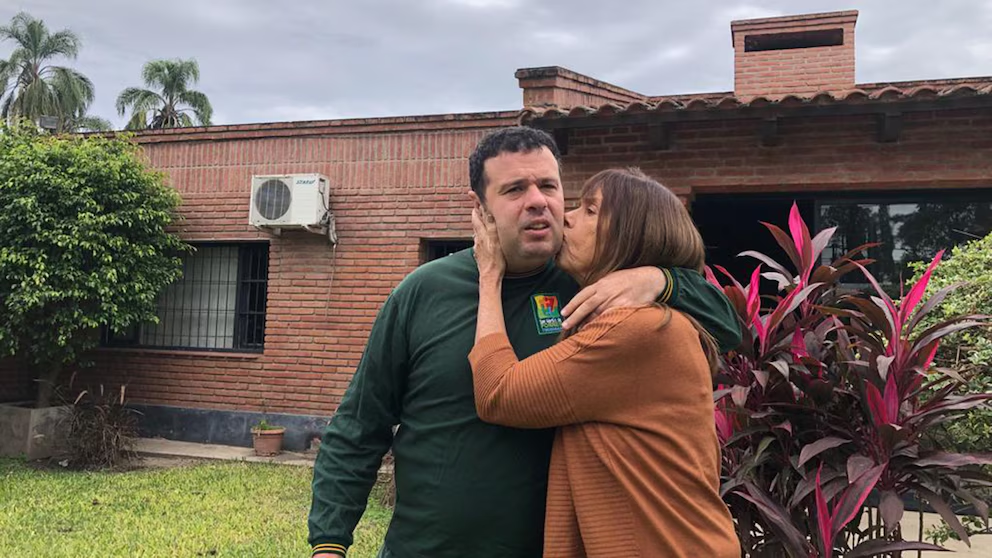
Dolores Pujol
Dolores’ love teaches us that true mothers not only give life once, but also build bridges so their children can keep walking even when they can no longer hold their hands.