
In this scientist’s hands is a pup that was never born.
It is a sea lion fetus preserved in formalin, one of the quietest pieces of evidence of what El Niño in 1997 and 1998 left behind at Punta San Juan, on the coast of Ica, Peru.
The extraordinary warming of the ocean altered the availability of food for animals that depended on the Humboldt Current. For sea lions, the disaster also coincided with one of the most delicate stages of their lives: reproduction.
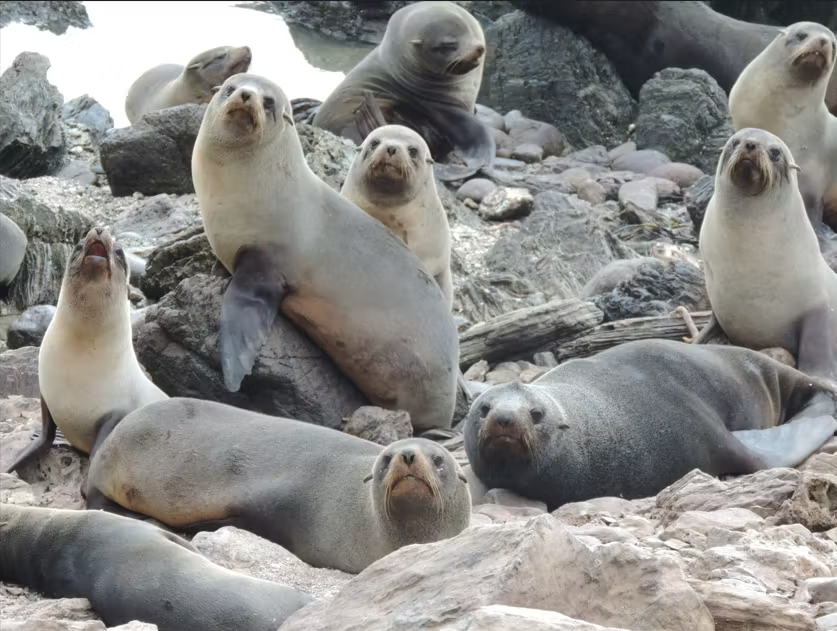
At Punta San Juan, more than 2,000 sea lion pups died in just one week. In the case of fur seals, mothers had to remain at sea for between 10 and 20 days in search of food, and the few pups that were born ended up dying within weeks, many of them from hunger.
The beaches began to fill with bodies.
The populations managed to recover after that catastrophe, although the threat posed by El Niño never disappeared. Scientists continue to use Punta San Juan precisely to understand how changes in the ocean affect species that depend on it.
That is why the small specimen preserved in formalin is not merely a piece of the past. It is a reminder of how quickly a changing ocean can transform a coast teeming with life into a beach covered with dead animals.