
Valerie Dursi-Barbuti was 23 when she arrived at the ER in 2013, convinced she might have appendicitis. She had spent the night sweating and doubled over in pain, but while she waited, the doctors saw her as a young woman exaggerating her menstrual cramps.

After hours of trembling, she sat on the floor of the treatment area so someone would see her. When they finally gave her a CT scan, the staff misread it and gave her medication for a urinary tract infection she didn’t have, then sent her home because of a possible ovarian cyst. They didn’t even do a blood test…
Had they done so, they would have seen her elevated white blood cell count, a sign of infection.
The pain returned that night, and her fever reached 40 °C. Desperate, she made an appointment with a gynecologist, who ruled out the cyst and told her they had found a “mass” that could be cancer. Her mother asked for the test again, but they told her it wasn’t necessary.
Valerie kept waiting and taking medication that wasn’t making her feel any better. After several days of calls warning that her condition was getting worse, her family returned to the hospital. When she had surgery, her abdominal cavity was full of infection.
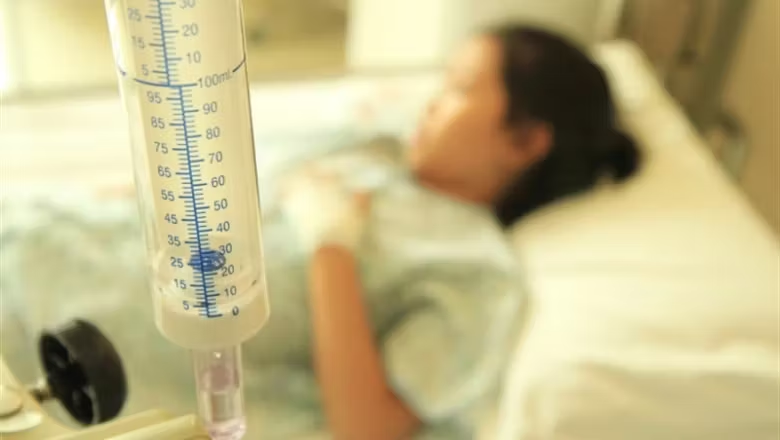
Her blood pressure dropped dangerously low, she had trouble getting enough oxygen, and her body was completely swollen. Her parents managed to transfer her by ambulance to another hospital, where she was admitted to intensive care and treated for septic shock and double pneumonia.
Her appendix had ruptured and completely disintegrated inside her body.
Valerie survived, but she needed weeks in the hospital, intravenous antibiotics, and months of rehabilitation to regain her strength and learn to walk, speak, and raise her arms again. Then came anxiety, depression, and post-traumatic stress.
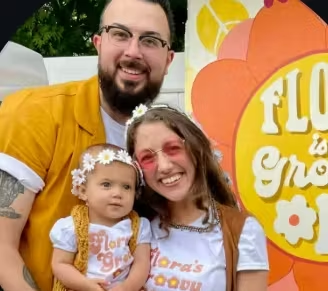
It had all started with pain she knew wasn’t normal, but it was dismissed as a menstrual problem. Her story ended with her alive, but it is a warning: a woman’s pain should not have to become a life-threatening emergency to be taken seriously.